





Welcome to the Tokyo International Minato Thyroid Clinic, where we are dedicated to providing you with the best-in-class, high-quality specialized care for thyroid disease. We prioritize your convenience and the continuity of your treatment. Understanding that our patients lead busy lives balancing school, work, and family, we open at 8:00 AM so you can easily receive the exceptional care you need.
- Clinical Department
- Meet the Director
- Clinic Hours
- Appointments Required
- Location & Access
- Payment & Health Insurance
- Frequently Asked Questions (FAQ)
Clinical Department
Thyroid Disease Specialist Clinic
We specialize exclusively in the diagnosis, testing, and treatment of thyroid conditions, including Graves' disease, Hashimoto's disease, thyroid nodules (swellings/lumps), and thyroid hormone abnormalities.
Meet the Director
Dr. Yuka Kosuga, Clinic Director
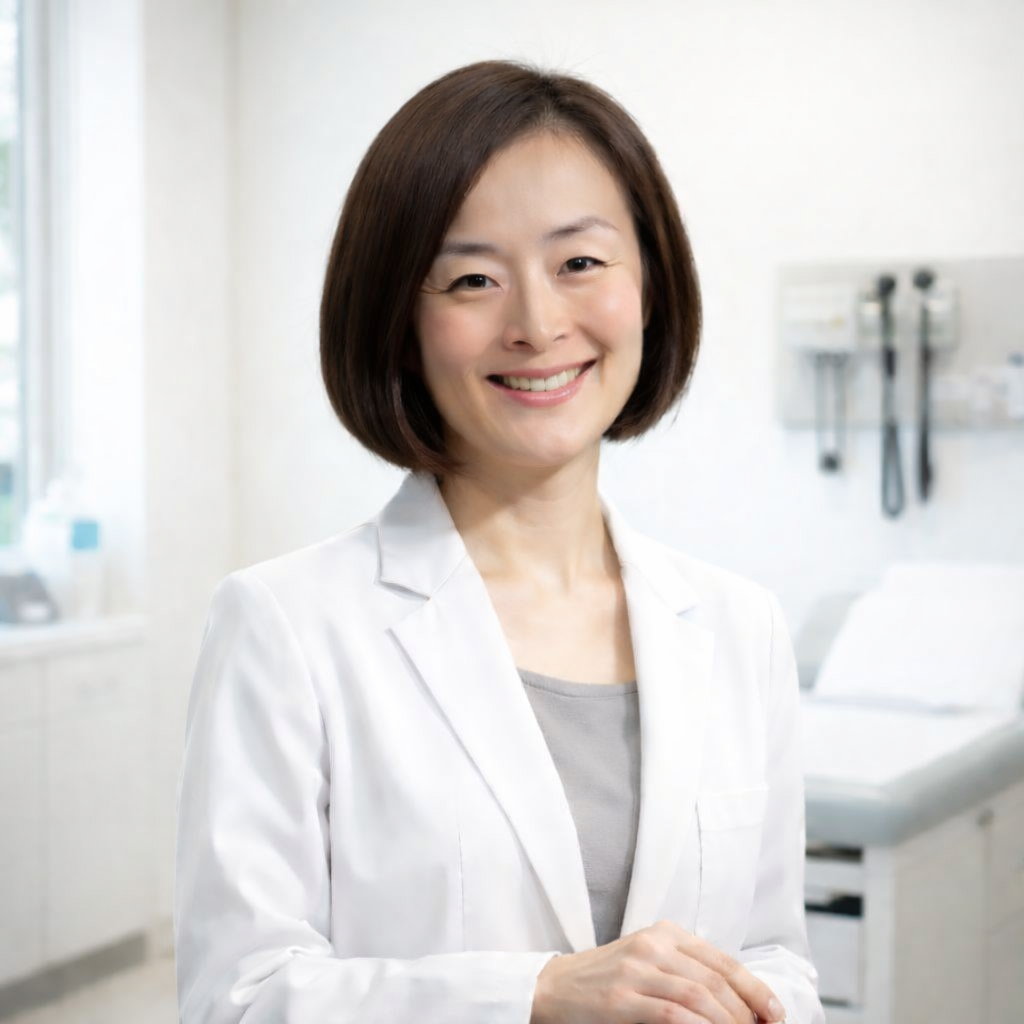
A Message from the Director
For over 15 years, I have practiced internal medicine at a specialized thyroid hospital, treating a wide range of thyroid conditions such as Graves' disease and Hashimoto's disease. Thyroid diseases can develop as early as a patient's teenage years, making it a significant challenge to continue treatment while balancing school, work, and childcare. I have seen many patients step away from their treatment because the time and effort required to visit the clinic became too much of a barrier. Knowing that many of our patients are managing their health alongside busy daily lives, I established this clinic with "ease of access" and "ease of continuing care" as our top priorities.
Furthermore, thyroid diseases are relatively common among women and are deeply connected to various life stages—such as higher education, employment, pregnancy, childbirth, and menopause. Utilizing my perspective as a female physician, my goal is to provide an environment where you can comfortably discuss sensitive symptoms and concerns.
The critical role of thyroid hormones in fertility treatment has also long been recognized. Having gone through fertility treatment myself, I deeply understand the struggles and uncertainties involved. I am here to stand by your side and help you navigate medically sound options.
By providing care that respects your time and lifestyle, I strive to create an encouraging environment where you can feel confident continuing your treatment—and leave our clinic feeling energized.
Board Certifications
- Board Certified Thyroid Specialist (Japan Thyroid Association)
- Board Certified Endocrinologist & Certified Endocrine Educator (Provisional) (Japan Endocrine Society)
- Board Certified Diabetologist (Japan Diabetes Society)
- Certified Internal Medicine Physician (Japanese Society of Internal Medicine)
- Certified Occupational Physician (Japanese Society of Internal Medicine)
Affiliated Societies
- Japan Thyroid Association
- Japan Endocrine Society
- Japan Diabetes Society
- Japanese Society of Internal Medicine
- Japan Association of Breast and Thyroid Sonology
- Japanese Society for Medical Care of Women
- American Thyroid Association (ATA)
- Endocrine Society (ENDO)
- American Diabetes Association (ADA)
Clinic Hours
Start your day with peace of mind. We open at 8:00 AM for early-morning consultations.
| Day | Mon | Tue | Wed | Thu | Fri | Sat | Sun & Holidays |
|---|---|---|---|---|---|---|---|
| Hours | 8:00-13:00 | 8:00-13:00 | 8:00-13:00 | 8:00-13:00 | Closed* | 8:30-12:30 | Closed |
| 14:30-17:00 | 14:30-17:00 | 14:30-17:00 | 14:30-17:00 |
*The clinic is closed on Fridays, as the Clinic Director provides full-day outpatient care at Ito Hospital (a specialized thyroid hospital).
Appointments Required
To minimize your wait time and ensure a smooth visit, our clinic operates by appointment only. Please make sure to book your visit in advance via our Web Reservation system or LINE. If you visit the clinic without a prior appointment, please be aware that you may experience a significant wait time.
Location & Access
- Address: 7th Floor Century-Mita Building, 5-31-15 Shiba, Minato-ku, Tokyo 108-0014
- Mita Station (Toei Mita & Asakusa Lines): 30 seconds on foot
- Tamachi Station (JR Yamanote & Keihin-Tohoku Lines): 1 minute on foot
Payment & Health Insurance
We accept Japanese Public Health Insurance (please bring your health insurance card or My Number card).
We also warmly welcome patients who do not have Japanese health insurance. In these cases, consultations and treatments are provided on a 100% out-of-pocket basis.
Please note: Patients who are not enrolled in the Japanese public health insurance system will be charged 20 Japanese Yen (tax included) per medical fee reimbursement point of the Japanese health insurance system.
Frequently Asked Questions (FAQ)
What are the common symptoms of a thyroid condition?
Typical symptoms include heart palpitations, weight fluctuations (gain or loss), fatigue, hand tremors, swelling/edema, and a swollen neck. Sometimes, blood tests can reveal abnormalities even if your symptoms are mild. If you have been flagged during a health checkup or have concerning symptoms, we recommend an early consultation.
What should I bring to my first appointment?
Please bring your My Number Card (or your traditional health insurance card if you haven't transitioned yet), any medical subsidy certificates you may hold, and your medication notebook. If you have a referral letter, recent health checkup results, or test data from another clinic, please bring those as well for a smoother consultation.
Do I need a referral letter?
A referral letter is generally not required. You are welcome to consult with us if you have concerning symptoms or abnormal health checkup results. However, if you are currently undergoing treatment elsewhere, bringing a referral letter or past test results will help us understand your medical history better. If you don't have one, please do not worry—you can still be seen. Just be sure to make an appointment before you visit.
My health checkup indicated an enlarged thyroid (thyroid goiter). Should I see a doctor?
Yes. We will perform a thyroid ultrasound to measure your thyroid and confirm if it is genuinely enlarged. We will also conduct a blood test to evaluate your thyroid hormone levels and determine if an underlying condition exists. Even without symptoms, early evaluation and monitoring can prevent the condition from worsening. Please bring your checkup results and consult with us.
My health checkup showed abnormal thyroid hormone levels (too high or too low). Do I need to visit the clinic?
Yes. Even minor changes can be the early stages of a thyroid disease. We will retest your thyroid hormone levels via a blood test and check for "autoantibodies" to see if you have a specific thyroid condition. You can also receive a thyroid ultrasound on the same day, and if you wish, we will explain the results to you that same day.
Can I be seen here even if I am receiving treatment at another medical facility?
Yes, absolutely. It helps if you bring documents detailing your current treatment (such as a referral letter or medication notebook). We will coordinate with your other doctors as needed.
Is an appointment required?
Yes, our clinic operates by appointment only. Please book your visit in advance. If you arrive without an appointment, you may face a long wait time.
I was told I need an additional thyroid hormone test for a bridal checkup. Should I visit?
Yes. We will retest your thyroid hormones via a blood test and perform a thyroid ultrasound to ensure no underlying diseases exist. We can also consult with you on how to manage your health if you are planning to become pregnant in the future.
I am hoping to get pregnant. I am not undergoing fertility treatment, but do I still need a thyroid test?
Yes. Thyroid conditions are common among women of childbearing age and can impact pregnancy. We highly recommend getting tested at least once.
My fertility clinic/hospital told me I need a thyroid test. Should I come in?
Yes. Fluctuations in thyroid hormones can affect pregnancy. We will discuss a treatment plan and visit schedule tailored to your specific fertility treatment stage (fertility timing, artificial insemination, IVF, etc.).
A family member has a thyroid disease. Should I get tested too?
It has been noted that genetic factors can play a role in thyroid diseases. If your hormone levels are normal, we may just monitor your condition, considering your symptoms. If you have a family history of thyroid disease and are experiencing concerning symptoms, we recommend getting tested.